Appliance RepairCC · Repair Service [email protected]
Appliance repair services

The Service Studio

Everything we repair, the faults we see most often, and how to get your appliance ready before you get in touch. Pick a category to jump straight to it.

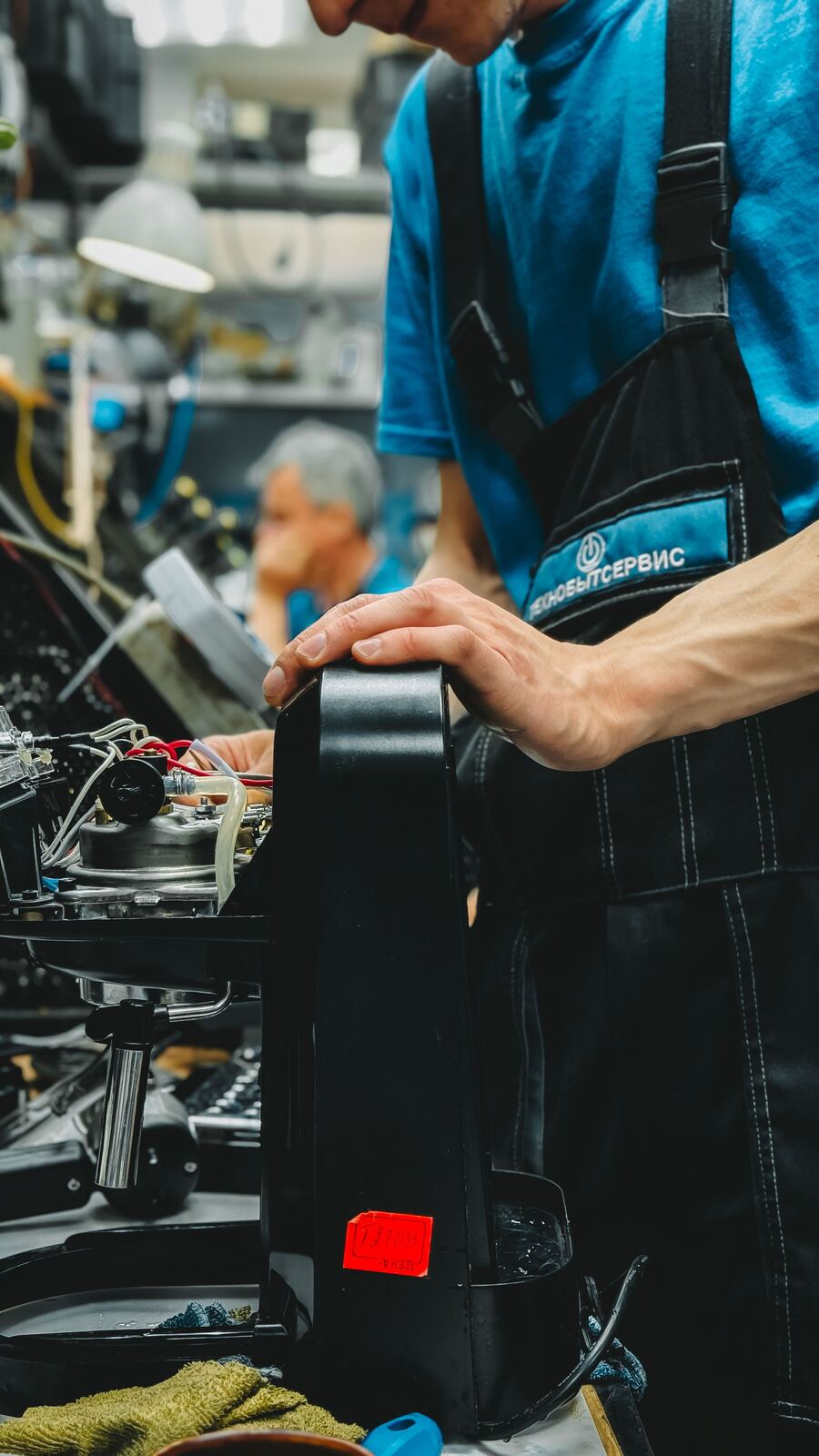
Technician checking the inside of an espresso machine
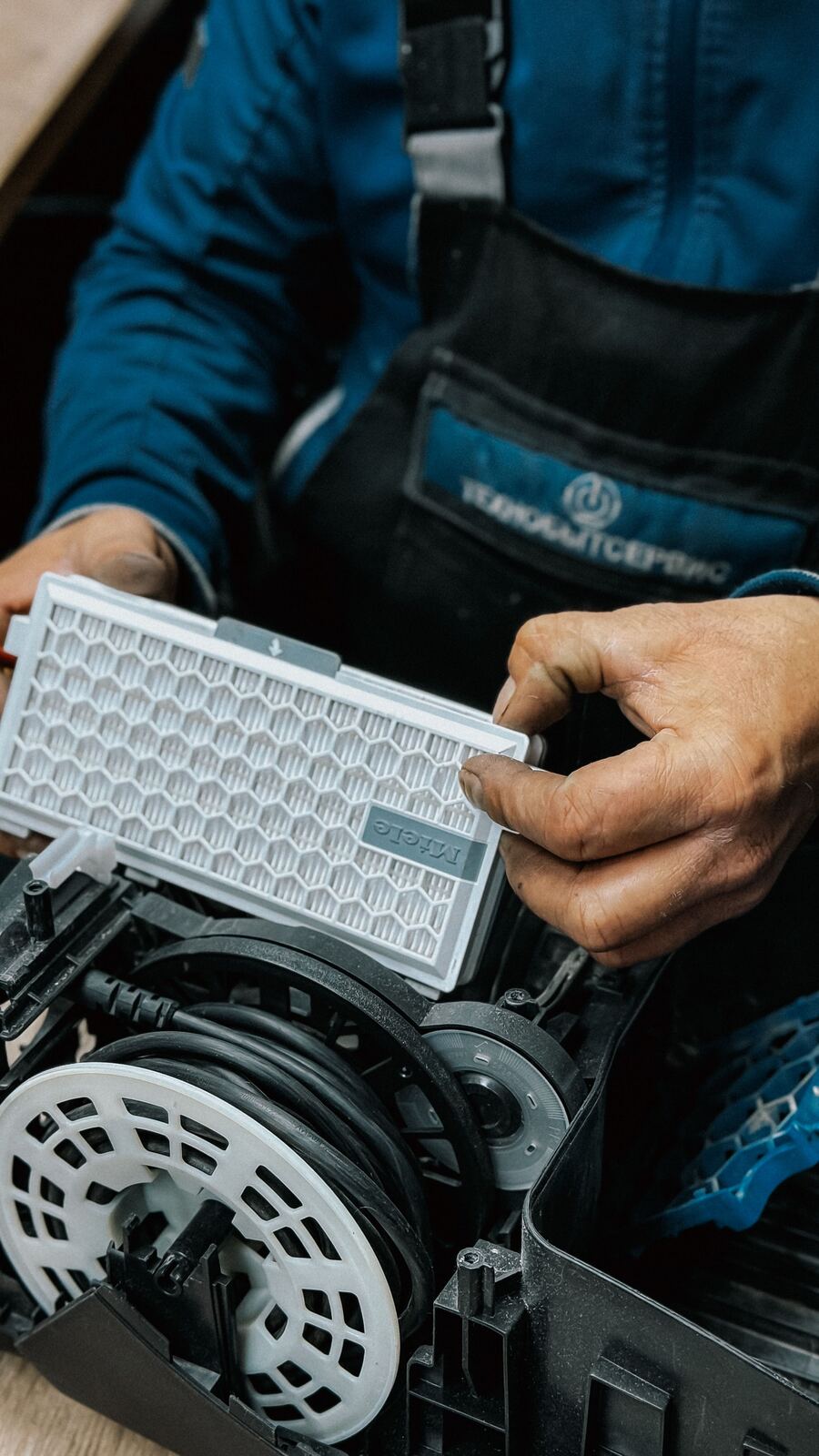
Technician holding a replacement HEPA filter over an opened vacuum cleaner
Appliance categories

Repair services by appliance

Each appliance type fails in its own way. Below you will find what typically goes wrong and how we approach it.

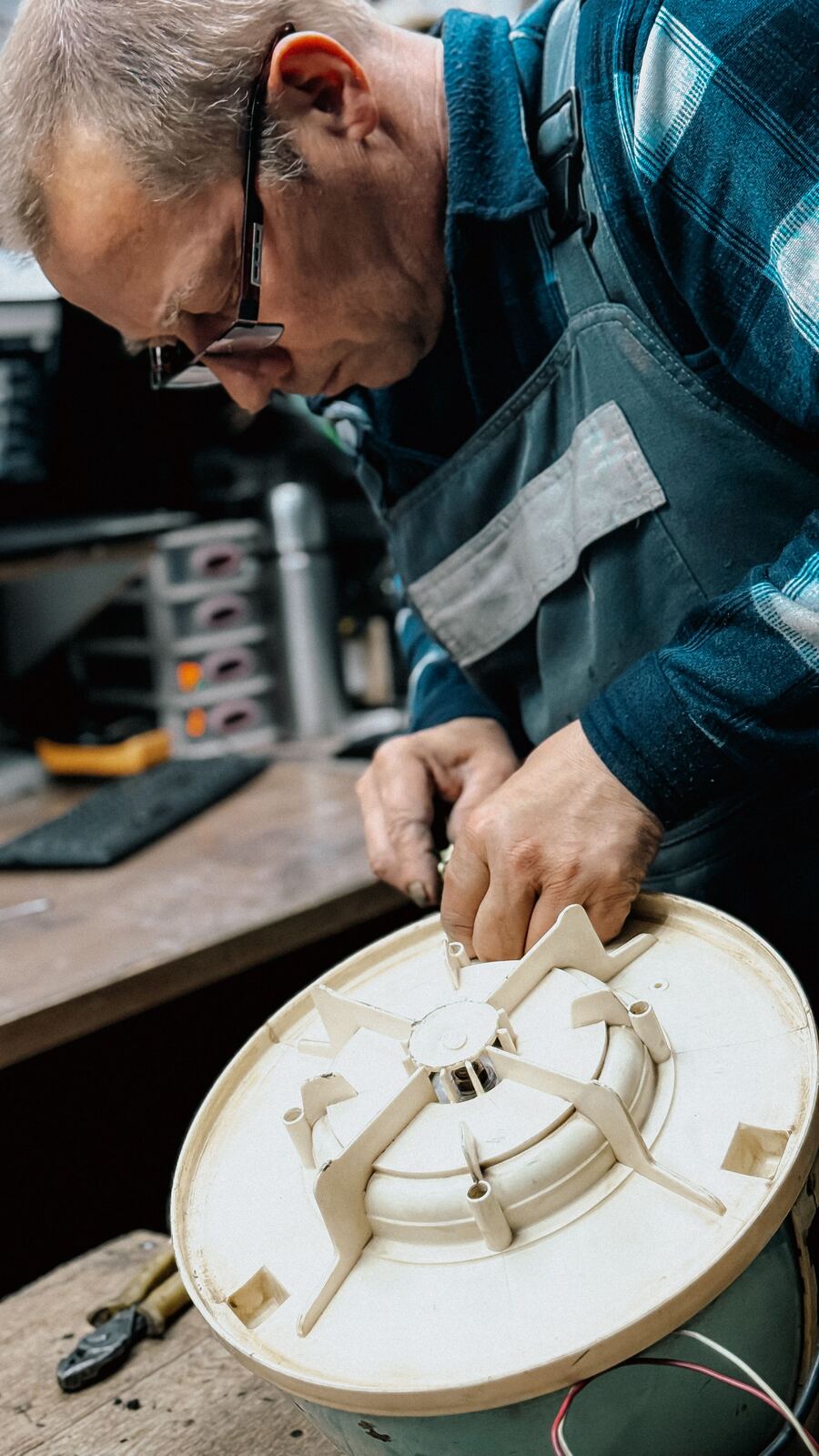
Technician working on the motor housing of a washing appliance
Laundry

Washing machine repair

Washing machines take a lot of strain — heavy loads, constant water and high-speed spinning. When something gives way, the symptoms are usually obvious, but the cause can sit in several places: the pump, the door lock, the motor, the bearings or the controls.

We work through the machine methodically, checking water flow, drive components and electrical parts until the fault is clear.
Common symptoms we look at

  • Will not drain or spin
  • Door stays locked
  • Leaking water
  • Loud banging or grinding
  • Drum not turning
  • Will not power on
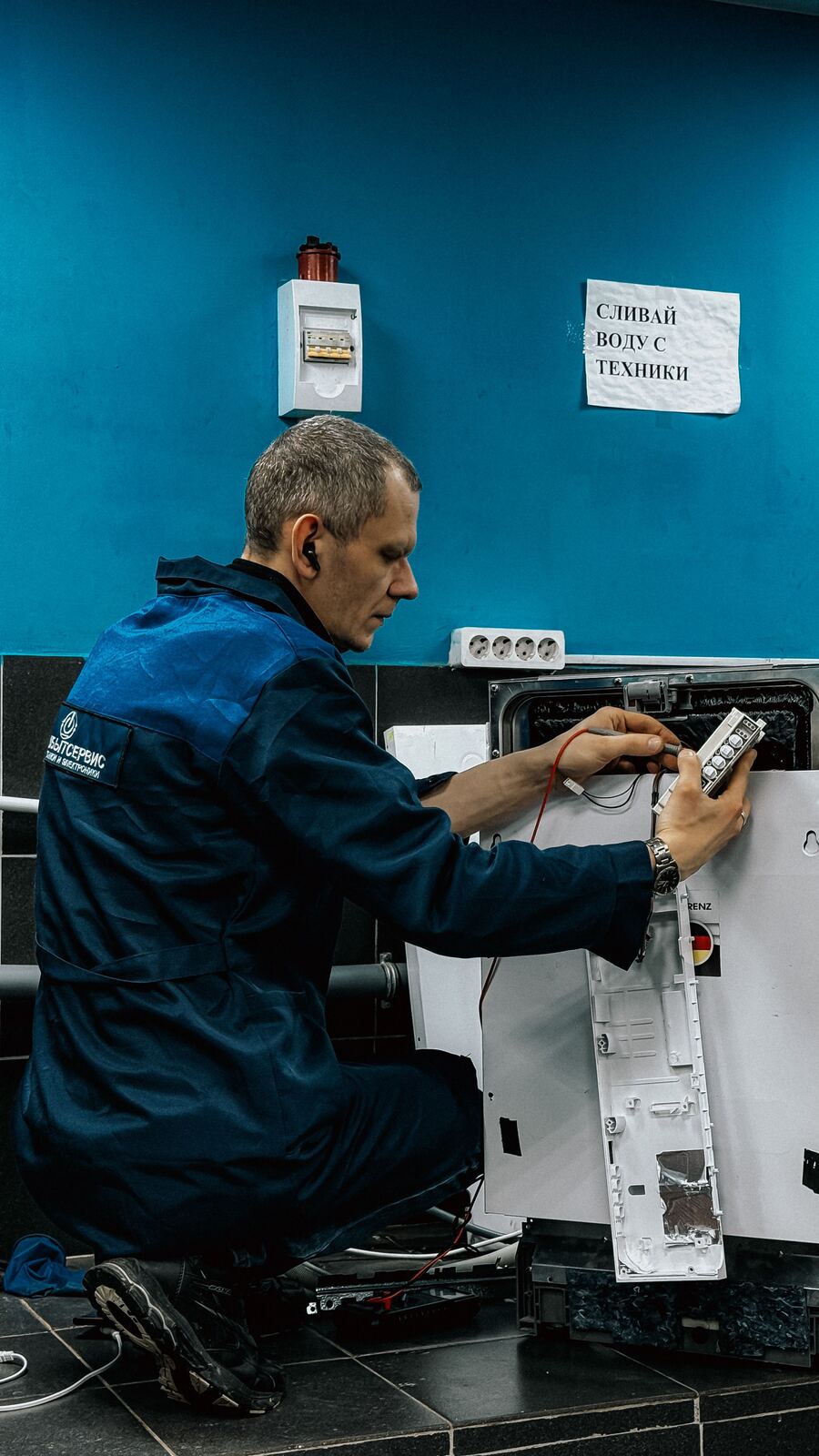
Technician testing a dishwasher control panel with a multimeter
Kitchen

Dishwasher repair

A dishwasher combines water, heat and electronics in a small space. Control panels, door switches, heating elements and drain pumps are frequent culprits when cycles fail or dishes come out dirty or wet.

Electrical testing helps confirm whether a part has failed or simply lost its connection, avoiding unnecessary replacements.

Common symptoms we look at

  • Buttons not responding
  • Cycle stops mid-way
  • Water left in the base
  • Dishes not drying
  • Not heating
  • Error lights flashing
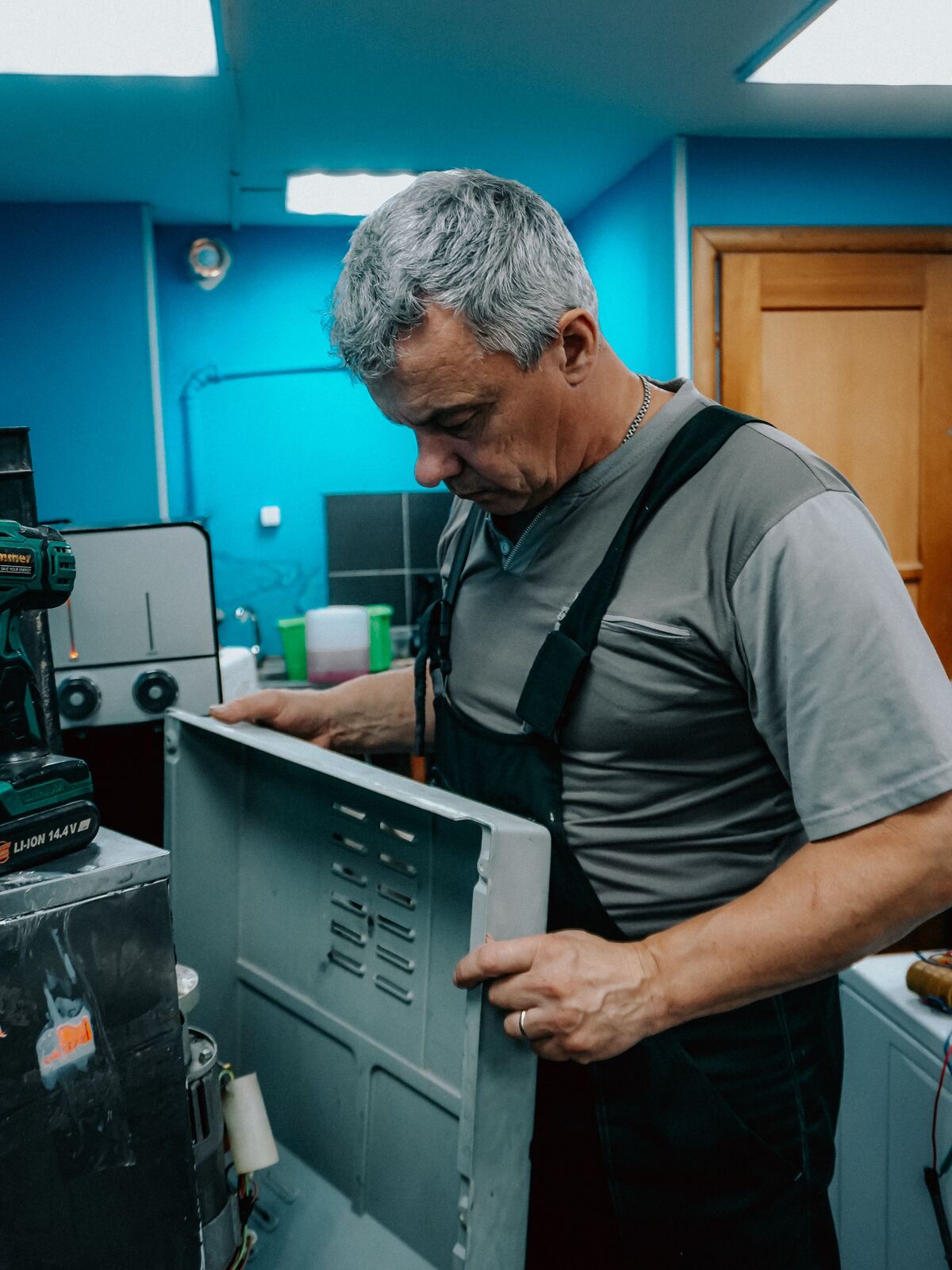
Technician removing the outer panel of an appliance to reach internal components
Cooking

Oven & cooker repair

Ovens and cookers rely on elements, thermostats, fans and switches working together. When one fails, food cooks unevenly, takes far longer, or the oven will not heat at all.

Reaching these parts often means removing outer panels carefully, then testing each component in the heating circuit.

Common symptoms we look at

  • Oven not heating
  • Uneven cooking
  • Fan not running
  • Door or hinge problems
  • Controls or knobs faulty
  • Trips the electrics
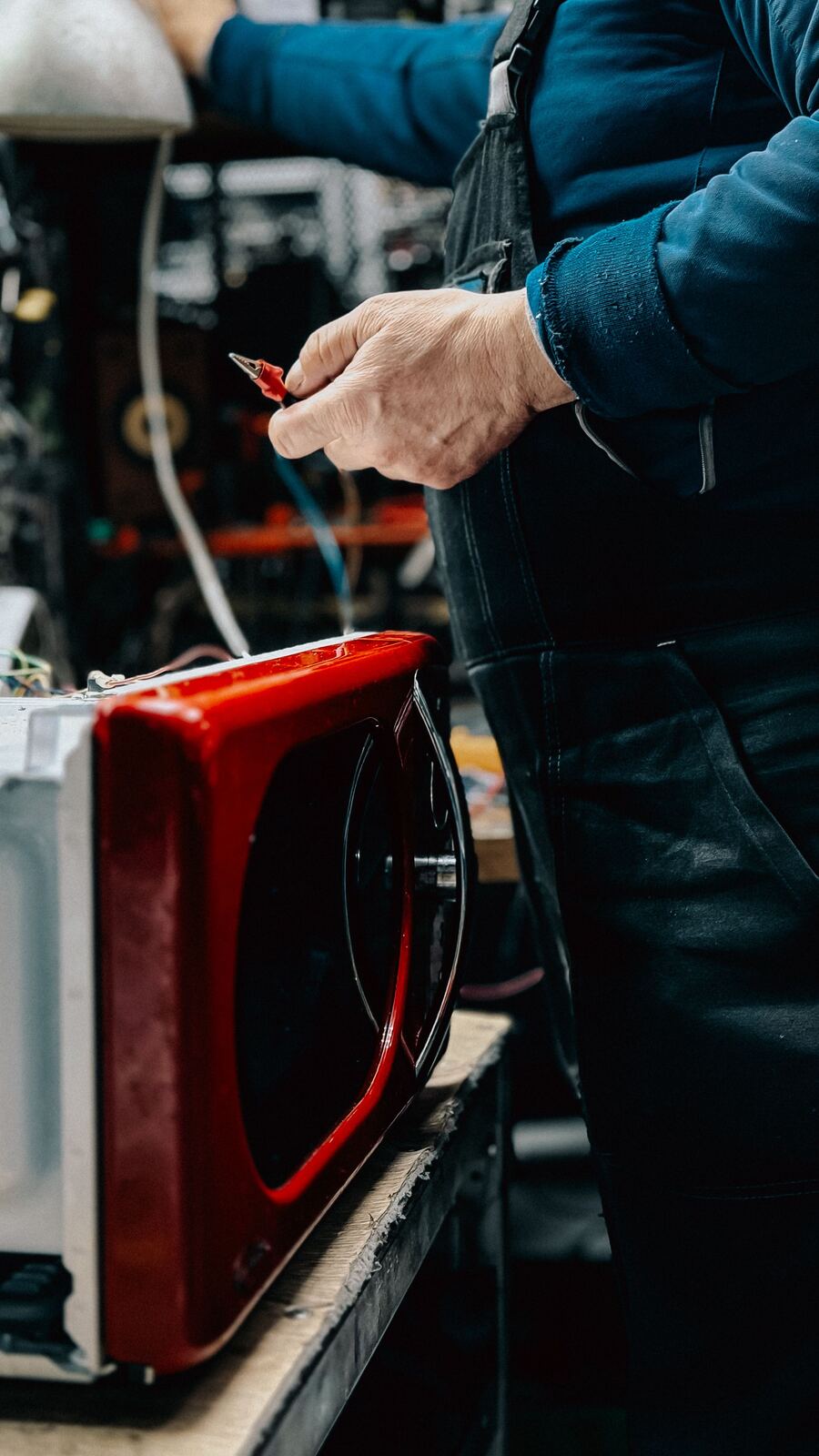
Technician holding a test lead beside a red microwave oven on the workbench
Cooking

Microwave repair

Microwaves contain components that store a high-voltage charge even after being unplugged, so they should only be opened by someone who knows how to make them safe. Common faults involve door switches, turntable motors, keypads and the parts that generate heat.

Please do not open a microwave casing yourself — describe what is happening and let us take it from there.

Common symptoms we look at

  • Not heating food
  • Turntable not turning
  • Sparking inside
  • Keypad not working
  • Door will not latch
  • Light or fan problems
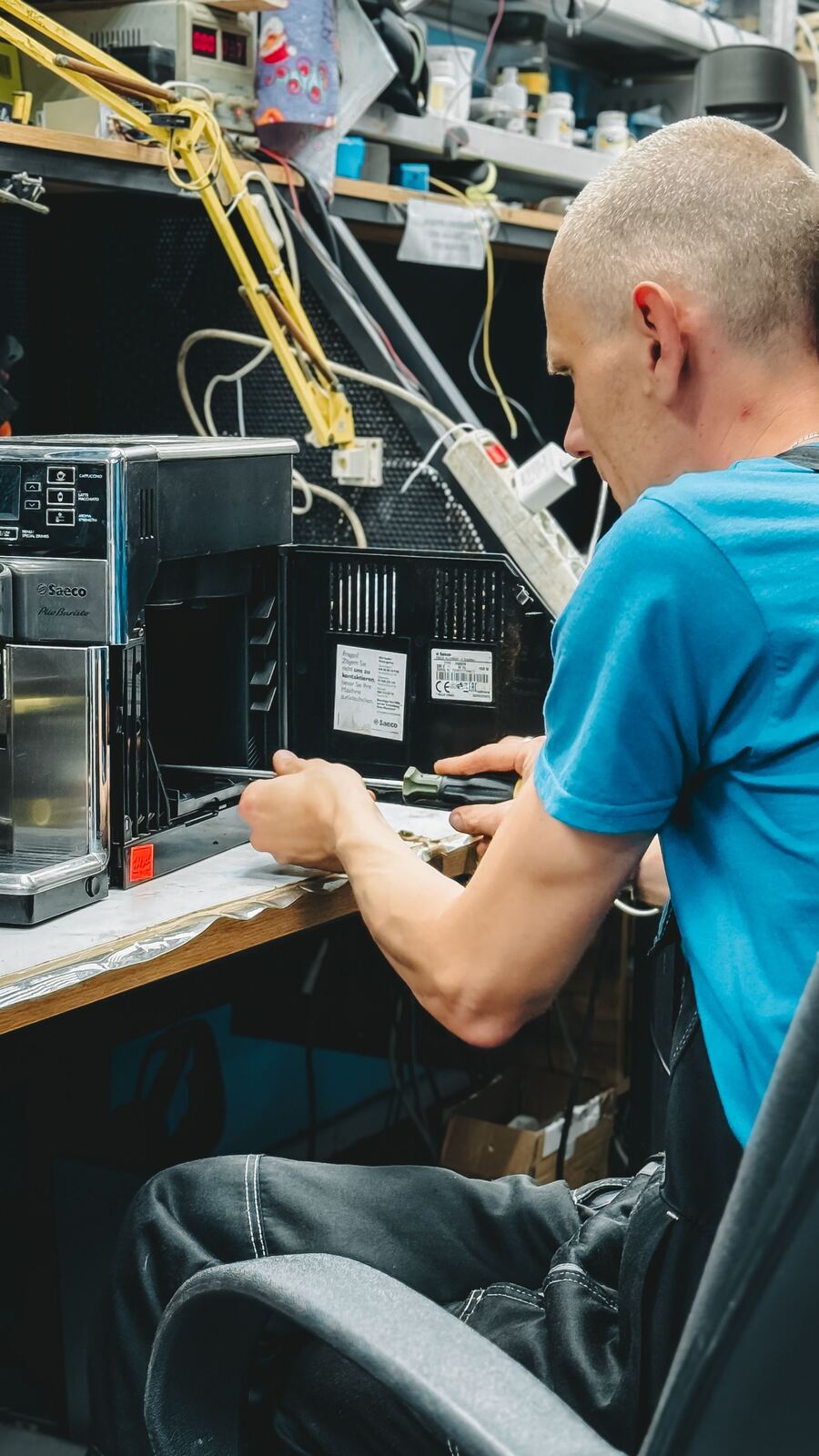
Technician removing the side panel of a bean-to-cup coffee machine
Kitchen

Coffee machine repair

Espresso and bean-to-cup machines are packed with pumps, valves, heaters, sensors and brewing units. Limescale, worn seals and blocked pathways are frequent troublemakers, alongside electrical faults.

We open the machine, trace water and power paths, and look at both the mechanical and electrical side of the problem.

Common symptoms we look at

  • Leaking underneath
  • Coffee not hot enough
  • No water flow
  • Grinder noises
  • Brewing unit stuck
  • Error or descale lights
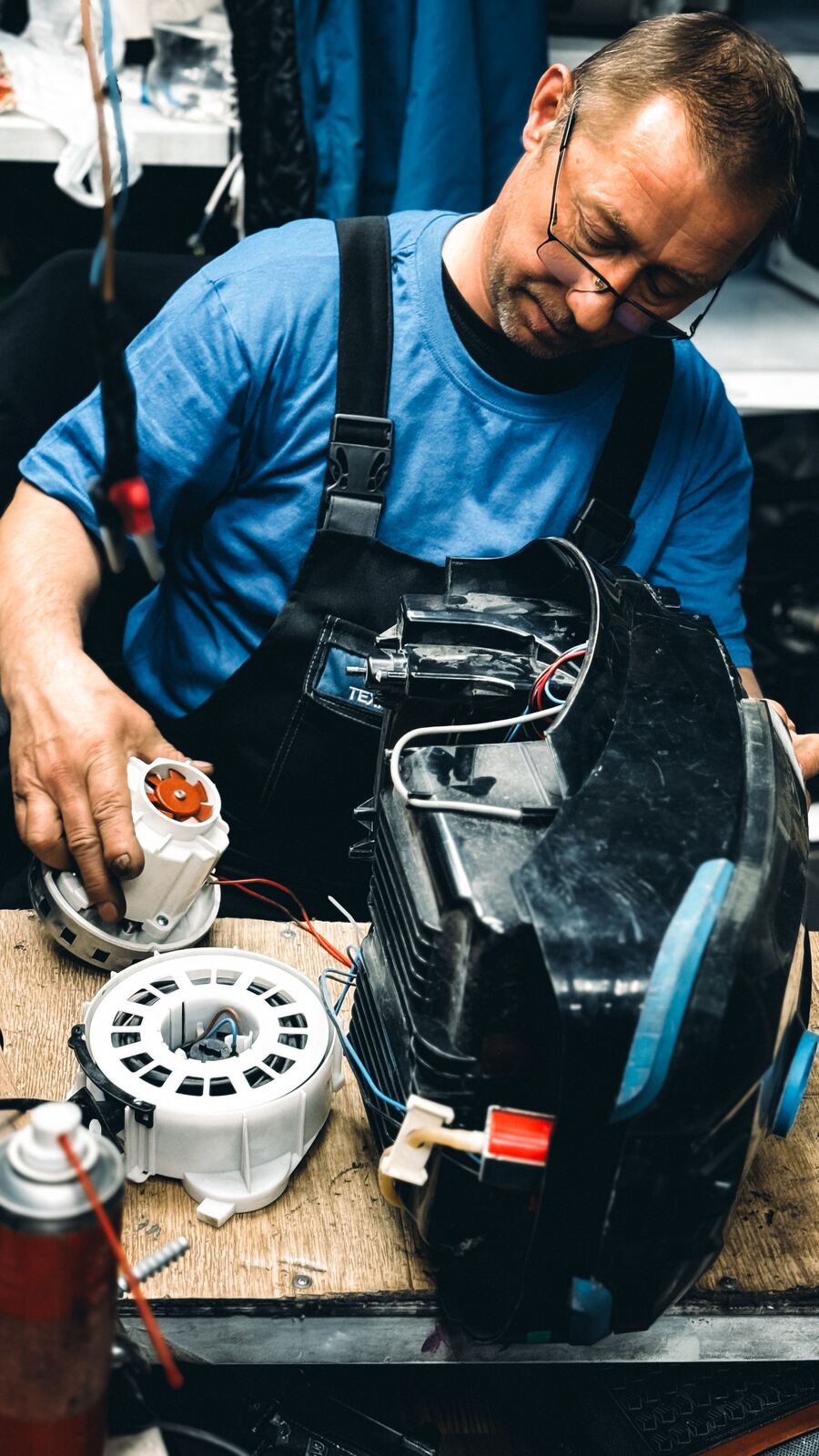
Technician fitting a replacement motor into a vacuum cleaner body
Cleaning

Vacuum cleaner repair

A vacuum that has lost its pull is frustrating, and the reason is not always a full bag. Blocked hoses, tired filters, failing motors and cable reels that will not rewind all show up regularly on the bench.

Motors, filters and cable reels can often be serviced or replaced, giving the vacuum a much longer working life.

Common symptoms we look at

  • Weak suction
  • Motor cutting out
  • Burning smell
  • Cable will not rewind
  • Overheating
  • Clogged filters
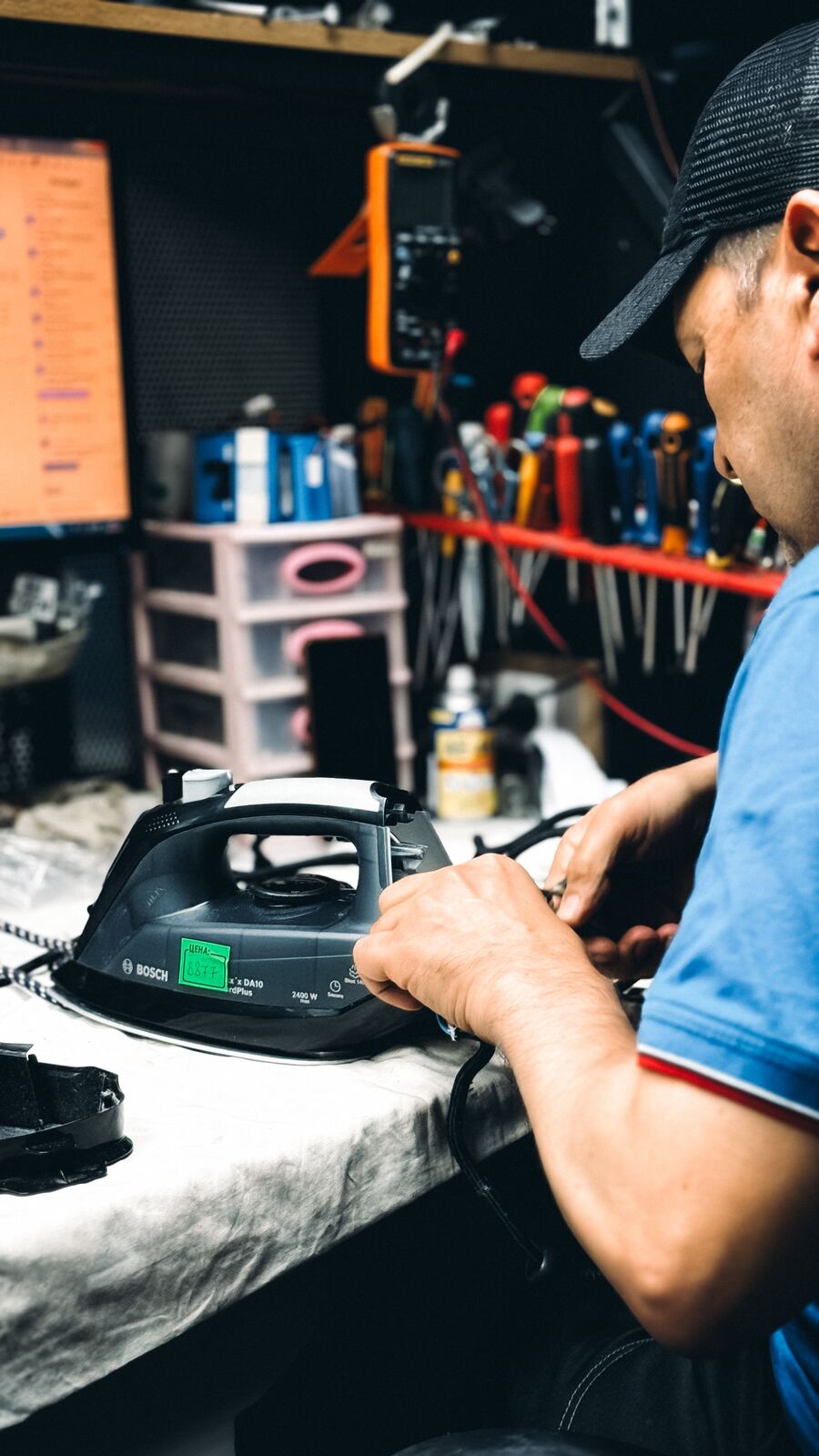
Technician repairing the power cord of a steam iron
Laundry

Iron & steam appliance repair

Irons and steam generators are handled every day, so cords and plugs take a lot of wear. Damaged cables are a safety risk and should not be used.

We also look at heating, steam output and water-tank leaks.

Common symptoms we look at

  • Frayed or damaged cord
  • Not heating
  • Little or no steam
  • Leaking water
  • Lights not working
  • Cuts out during use
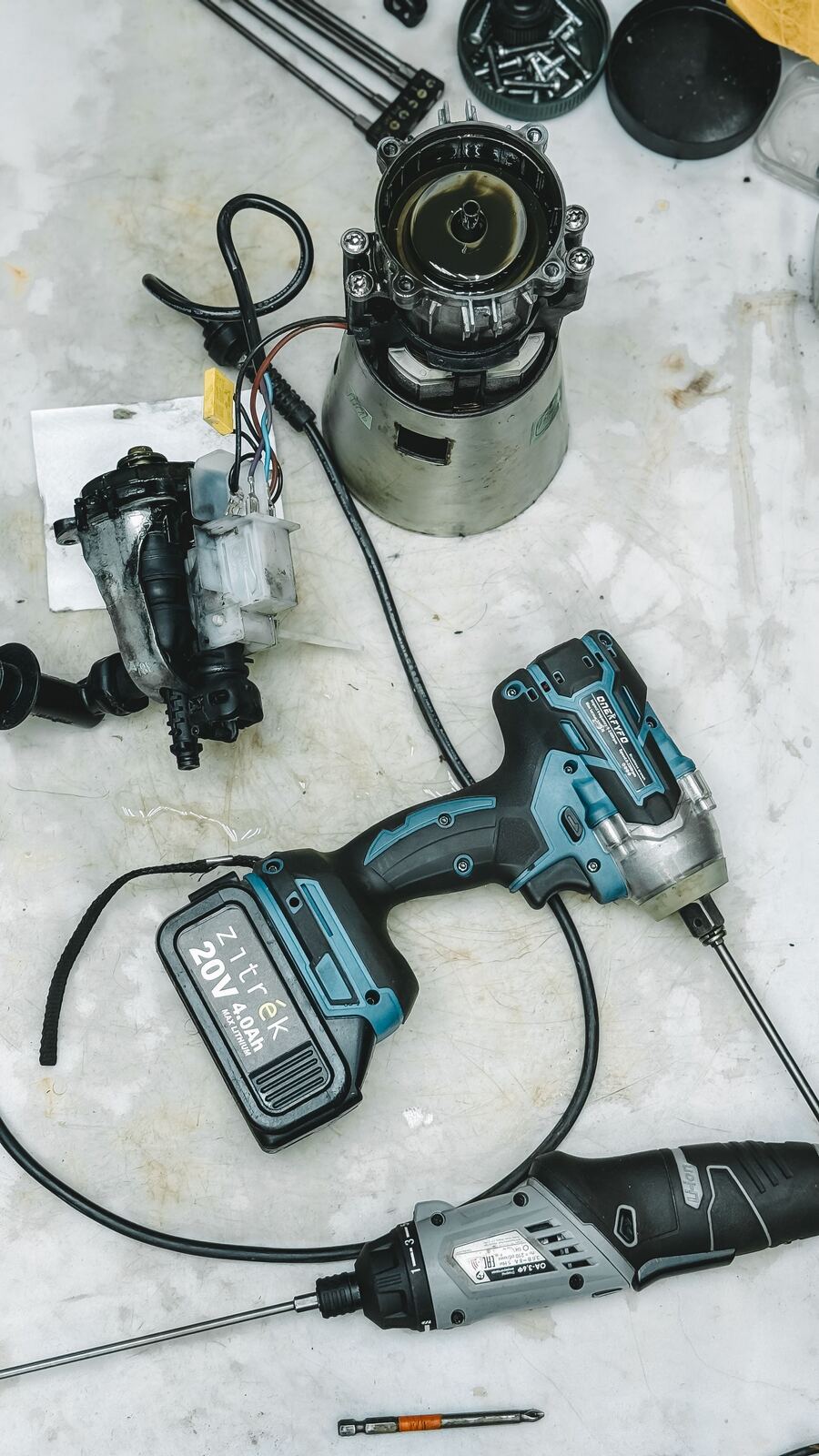
Disassembled blender motor base and appliance parts on a workbench with cordless drivers
Countertop

Small kitchen appliance repair

Blenders, mixers, food processors and similar countertop machines usually fail at the motor, the switch or the wiring. Many can be opened, cleaned, tested and put back into service.

If a repair does not make sense for a particular appliance, we will tell you so.

Common symptoms we look at

  • Motor will not start
  • Speed settings faulty
  • Burning smell
  • Loose or damaged cable
  • Intermittent power
  • Unusual noise
Early warning signs

When to stop using an appliance and get it checked

Some faults are an inconvenience. Others are a signal to switch off and unplug straight away.

Burning smell or smoke

Switch off at the wall and unplug. Do not use the appliance again until it has been inspected.

Tripping the electrics

If an appliance repeatedly trips a fuse or breaker, there may be an electrical fault inside it.

Water where it should not be

Leaks near electrical parts are a hazard. Turn off the water supply and power before cleaning up.

Damaged cables or plugs

Cracked insulation, exposed wires or scorch marks on a plug mean the appliance should not be used.

New or louder noises

Grinding, squealing or knocking often points to wear that gets worse the longer it is ignored.

Sparks or flashes

Especially in microwaves — stop the appliance immediately and leave the casing closed.

Useful information

Before you get in touch

A few details and a couple of simple precautions make the first conversation far more useful.

Information to gather

  1. The appliance type, brand and model number — usually on a label inside the door, on the back or underneath.
  2. A short description of the fault and when it started.
  3. Any error codes or flashing lights shown on the display.
  4. Photos of the label, the display and the problem area if you can take them safely.
  5. Anything you have already tried, such as cleaning a filter.

Keep yourself safe

  1. Unplug the appliance or switch it off at the isolator before looking at it.
  2. Turn off the water supply to washing machines and dishwashers if they are leaking.
  3. Never open a microwave casing — internal parts can hold a dangerous charge.
  4. Let ovens, irons and coffee machines cool fully before handling.
  5. Do not use any appliance with a damaged cable or plug.
Gallery

Photos and video from day-to-day repair work. Select any photo to view it larger.

Questions

Service questions, answered

Is it worth repairing my appliance, or should I replace it?

It depends on the fault, the age and condition of the appliance, and the availability of parts. Once the problem has been diagnosed, we will talk you through the options so you can make an informed choice.

How much will my repair cost?

Every repair is different, and the cost depends on what has failed and which parts are needed. We prefer to understand the fault before discussing figures, rather than guessing in advance.

What should I include in my first email?

The appliance type, brand, model number, a description of the problem and any error codes. Photos are very helpful. The Contact Point has a simple template you can copy.

Can I keep using the appliance until it is repaired?

If there is any burning smell, sparking, leaking near electrics or damage to the cable or plug, stop using it and unplug it. For minor faults, use your judgement — and if in doubt, leave it switched off.

Do you repair appliance types not listed here?

Possibly. Send us a message describing the appliance and the problem, and we will let you know whether it is something we can help with.

Something stopped working? Tell us about it.

Send a short description of the appliance and what it is doing. A model number and a photo or two help us understand the problem from the start.